
The Two Amendments Protecting Everyone and the Court Dismantling Them (Part 2)
The people in power are counting on you not knowing the difference.

A note on this part
Part One told the story of who actually built American democracy. This part explains the two constitutional tools that made the expansion of rights possible. And then shows you what is being done to them right now.
Get a cup of tea, settle in for a few minutes, and by the time you finish reading this, the pattern will be impossible to unsee.
What Is an Amendment?
The Constitution is the rulebook for the United States government. It says what the government can and cannot do. But the people who wrote it knew they would not get everything right the first time. So they built in a way to add new rules which are called amendments.
The first ten amendments were added right away in 1791. We call them the Bill of Rights and they cover things like freedom of speech, freedom of religion, and the right to a fair trial.
Two of those amendments matter more than almost any others right now. One was written before the Civil War and one came after it. Together they are the legal protection for almost every right that extends beyond wealthy white men and both are under attack.
The 9th Amendment: The Rights Nobody Wrote Down
The 9th Amendment is one sentence long. Here it is in plain English.
Just because a right is not written in the Constitution does not mean you do not have it.
That is what it says. The full legal text is harder to read but that is what it means.
Here is why James Madison wrote it. When the founders were adding the Bill of Rights, some of them worried about making a list at all. If you write down ten rights, a future government might say those ten are the only rights you have. Everything else is fair game.
Madison agreed that was a real danger. So he wrote one sentence to stop it.
Think of it this way. If you write a list of rules for your household that says no running in the house, no yelling at dinner, and no hitting, that does not mean everything else is allowed. It does not mean it is fine to steal from each other just because stealing is not on the list. The list is just a starting point and not a complete description of how to treat each other.
The 9th Amendment says the same thing about rights. The ones written down are a starting point. The ones left off the list still belong to you.
What kind of rights are we talking about? Choosing your own doctor. Deciding whether or not to have children. Marrying the person you love. Raising your own family the way you choose. Choosing what religion you want to believe in regardless of how wild and strange it may be. Living in your home without the government watching everything you do.
None of those things appear in the Constitution by name. They did not need to because everyone understood they were yours. The 9th Amendment was written to make sure that understanding could never be used against you. (So smart!)
And here is something most people do not know.
Legal writer Christopher Armitage published a piece this week that makes an argument about the 9th Amendment that I had never seen laid out so clearly. What follows draws directly from his thinking.
The right to privacy lives in the 9th Amendment. Not just in the 14th Amendment that we will discuss in a moment. Madison wrote the 9th Amendment specifically to protect the kinds of natural rights that nobody thought they needed to write down. Privacy is one of the most basic of those rights.
This matters because the 14th Amendment’s privacy protections have been attacked by the Court before, in an era called Lochner, when judges used similar legal reasoning to strike down laws protecting workers. That history gives the Roberts Court a way to argue that privacy protections based on the 14th Amendment are on shaky legal ground.
The 9th Amendment has no such weakness. Its text is simple and its meaning is CRYSTAL clear. Your private life belongs to you and the government has to justify taking that away. Not the other way around.
The people fighting to protect privacy rights have a stronger tool available than they have been using. It is the 9th Amendment. Madison wrote it for exactly this moment.
What the Court did with it.
For most of the last century the Supreme Court honored that promise.
In 1965 Griswold v. Connecticut protected married couples’ right to use birth control. The government could not tell them what to do in their own bedroom.
In 2003 Lawrence v. Texas protected private intimacy between same-sex partners. The government could not make it a crime.
In 2015 Obergefell v. Hodges established that same-sex couples had the right to marry. Love and commitment were not subject to a government veto.
These were not new rights the Court invented. They were the natural rights Madison’s amendment was always protecting.
Then in 2022 the Court overturned Roe v. Wade. And changed the rules for which unwritten rights get protection at all. A right now only gets protection if it has deep roots in American history going back centuries. The further back you look, the fewer people had rights. That is not a neutral standard. It is a mechanism for going backwards.
Justice Clarence Thomas then named the next targets. In his written opinion alongside the Dobbs decision he listed Griswold, Lawrence, and Obergefell. Contraception. Same-sex intimacy. Marriage equality. By name. In a Supreme Court opinion.
These are not guesses about where the Court might go. They are the announced plan of a sitting justice.
The 14th Amendment: The Floor Everyone Stands On
After the Civil War ended, the country had to answer a question it had avoided for nearly a century.
If enslaved people were now free, what did that actually mean?
The Southern states answered quickly and badly. They passed laws called the Black Codes designed to re-enslave Black Americans through legal tricks. If you could not prove you had a job, you could be arrested for vagrancy. If you were arrested, you could be forced to work without pay. Freedom on paper. Slavery in practice.
The 14th Amendment was the constitutional answer to that. Ratified in 1868, it said three things that changed everything.
anyone born on American soil is a citizen. No exceptions.
the government cannot take away your life, your freedom, or your property without following the law and treating you fairly.
the government must give every person equal protection under the law. Every person. Not every white person. Every person.
That third part became the legal foundation for nearly every expansion of rights in the century that followed.
Women fighting for equal treatment at work used it. Disabled Americans fighting for access to public buildings used it. Gay and lesbian Americans fighting for the right to marry used it. Immigrants fighting against deportation without a fair hearing used it.
The 14th Amendment was built by and for Black Americans who had just been freed from slavery. And it ended up protecting almost everyone who was not already protected.
That is what happens when you fight for a principle instead of just for yourself.
Here is the part that is almost hard to believe.
The Roberts Court has been using the 14th Amendment’s own language to dismantle programs designed to protect the people it was written for.
In 2023 the Court ended affirmative action in college admissions. The Equal Protection Clause, written to protect Black Americans from being treated unequally, was used to eliminate a program designed to address that same unequal treatment.
It is like using a ramp built for wheelchair users as a reason to close the accessible entrance.
This is the 14th Amendment being turned against its own purpose.
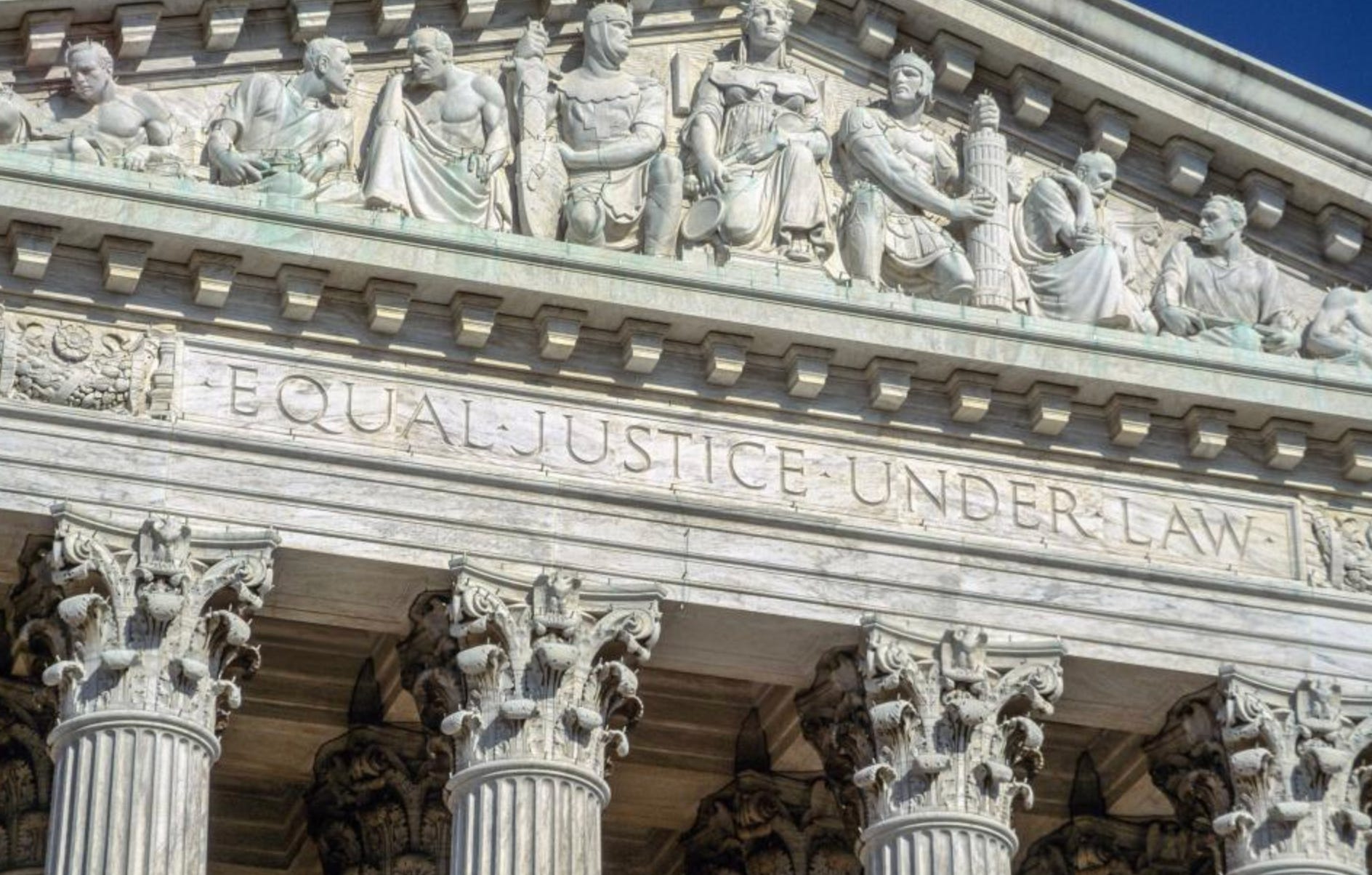
The Roberts Court: A Decade of Targeted Dismantling
Now that you understand what these amendments protect, here is what has been done to them:
This is a pattern.
2010 — Citizens United v. Federal Election Commission
Before this decision, corporations were prohibited from spending unlimited money to influence federal elections. The logic was simple. Corporations are not people. They do not vote. They do not serve in wars. They do not send their children to public schools.
The Roberts Court changed that. In a 5-4 decision it ruled that corporations have the same First Amendment rights as individual citizens when it comes to political spending. That spending money on elections is a form of free speech. And that limiting corporate spending to influence elections violates that right.
Dark money flooded into American politics immediately. Corporations and billionaires could now spend unlimited and largely untraceable amounts to elect the candidates who would protect their interests. The Koch network. The Federalist Society. The Heritage Foundation. The infrastructure that produced the very Court that issued this ruling was supercharged by the ruling itself.
This is the decision that made all the others possible. The Court that dismantled voting rights, reproductive rights, affirmative action, and presidential accountability was built and funded by the interests Citizens United unleashed.
The right targeted: the principle that in a democracy political power derives from citizens equally. One person, one vote. Citizens United made that a polite fiction.
2013 — Shelby County v. Holder
For decades, states with a documented history of blocking Black voters had to get federal permission before changing their voting laws. It was called preclearance. It existed because those states had proven, repeatedly, that without oversight they would find new ways to keep Black and Brown Americans from the ballot box.
The Roberts Court ended it. Chief Justice Roberts wrote that racism in voting was no longer the problem it once was.
Within hours, states began passing new restrictions. Voter ID laws. Polling place closures. Purges of voter rolls. In Georgia, more than 200 polling places closed in predominantly Black counties. In North Carolina, a federal court later described the new voting law as targeting African Americans with almost surgical precision.
The preclearance requirement was not perfect. It was working. The Court removed it anyway.
The right targeted: the ability of Black and Brown Americans to elect representatives who would protect their interests. Voting is how a democracy corrects itself. Remove that tool selectively and you remove the correction mechanism for the people who need it most.
2022 — Dobbs v. Jackson Women’s Health Organization
The Court overturned Roe v. Wade. But the decision did something beyond abortion that most coverage missed entirely.
It changed the legal test for which private rights get constitutional protection at all. A right now only gets protection if it was specifically recognized in American history going back centuries. The further back you look, the fewer people had rights.
In states where abortion is now banned, women are being denied treatment for miscarriages because doctors fear prosecution. Some have nearly died waiting for care. Some have traveled across multiple state lines for standard medical procedures.
The right targeted is not just reproductive choice it is the constitutional principle that your body, your home, and your most intimate relationships belong to you and not to the government. Once that principle falls for one group, the framework for dismantling it for others is already written.
2023 — Students for Fair Admissions v. Harvard and UNC
The Court ended affirmative action in college admissions.
The Equal Protection Clause. The clause written in 1868 to protect Black Americans from being treated as less than full citizens. The Roberts Court used that clause to eliminate a program designed to address the very discrimination the clause was written to prevent.
The effects are already documented. After California banned affirmative action in the 1990s, Black student enrollment at UCLA dropped by more than 50 percent. Other states show the same pattern. Describing the playing field as level does not make it level. It just removes the people who were never supposed to be there in the first place.
The right targeted: any remedy for documented systemic discrimination. The 14th Amendment turned against its own purpose.
2024 — Trump v. United States
The Court ruled that former presidents have broad immunity from criminal prosecution for official acts taken while in office.
No other American has this protection. Police officers can be prosecuted for rights violations. Soldiers can be court-martialed. Senators can go to prison for bribery. But a president who uses the powers of the office to commit crimes may now be beyond the reach of the law.
The 14th Amendment was built on the principle that no one stands above the law. This decision creates a class of Americans who stand above above the law. (WTF?)
Every future president inherits this zone. Every future president knows the Court has signaled that official acts are largely beyond reach.
The right targeted: accountability itself. Without it every other right becomes dependent on the goodwill of whoever holds power.
2025 — Birthright Citizenship Litigation
The current administration issued an executive order attempting to end birthright citizenship. The right of anyone born on American soil to be automatically recognized as a citizen.
This right comes directly from the first sentence of the 14th Amendment. It was written there because before the 14th Amendment, the Dred Scott decision had ruled that Black Americans could never be citizens regardless of where they were born. The Citizenship Clause was written to make that reasoning permanently unconstitutional.
Ending it would mean children born here to undocumented or temporary immigrant parents have no automatic claim to citizenship. Born here. Raised here. Knowing no other country. Legally belonging to none.
The Roberts Court is positioned to rule on this now. If it upholds the order, the very first sentence of the 14th Amendment becomes negotiable from hereon out. And if the first sentence falls, nothing else in the amendment is safe.
This was done on purpose. Even if they lose this round, the administration has embedded the argument into Supreme Court jurisprudence. The next case, with a slightly different set of facts or a shifted Court, picks up exactly where this one left off.
The right at stake is the most foundational question a country can answer. Who belongs here.
James Madison warned that democracy’s greatest internal threat was majority tyranny. The ability of those in power to use legal mechanisms to remove protections from those without it. He built the entire constitutional architecture to prevent exactly that. The separation of powers. The Bill of Rights. The amendments. All of it designed so that no majority could simply vote away the rights of the minority.
Every single decision on this list makes the circle of protected people smaller. Every single decision moves the law closer to the world the original Constitution described, where rights belonged to a specific class and everyone else existed at the discretion of those who held power.
Madison saw this coming. He built a system to stop it.
The people claiming to honor him are the ones dismantling it.
This is the tyranny the founders feared, executing its plan in plain sight.
The $1.776 Billion Signal
This past week brought an example so brazen it is almost difficult to process.
The Department of Justice announced a $1.776 billion fund to compensate the men who attacked the United States Capitol on January 6th. The number was not accidental. 1776. The year of the founding. A deliberate signal about whose founding this administration believes it is reclaiming.
Section 3 of the 14th Amendment was written specifically to prevent the federal government from rewarding insurrectionists. The principle behind it is simple. You do not compensate people who tried to destroy the republic from the public purse.
This administration took that amendment, written to prevent insurrectionists from being rewarded, and plan to use public money to pay the people who attacked the Capitol. Then named the fund after the founding itself.
The paddle is rising and falling. They are not hiding it anymore.
The Part They Will Not Say Out Loud
There is something underneath all of this that the current administration will never admit directly.
Removing rights is the point.
When people have rights, the government has to answer to them. When people can vote without barriers, organize without fear, make their own medical decisions, and live without government intrusion in their private lives, power flows toward the people.
When those rights disappear, power flows back to the top.
Every authoritarian government in history has understood this. You do not control a free people. You control a desperate one. People who cannot organize because organizing is dangerous. People who cannot vote because voting is restricted. People who depend entirely on the goodwill of those above them because every safety net has been cut away.
Taking rights away is the mechanism.
The Deflection
And when people ask why they are struggling, the current administration and the Heritage Foundation have a ready answer.
The civil rights movement promised prosperity for everyone. But people are still poor. Still left behind. So maybe, they say, the problem is the promise. Maybe extending rights to too many people is what broke the American dream.
That is a lie with a very specific purpose.
The reason working Americans are struggling is corporate power. Fifty years of stagnant wages. Crushed unions. The cost of housing, healthcare, and education that no ordinary salary can cover. Wealth concentrated at the top while everyone else treads water.
That is not a civil rights problem. It is a capitalism problem. But if you can convince people it is a civil rights problem, you protect the people actually responsible.
They tell white working Americans that sharing is what broke things. That the reason their lives are hard is because others got too much.
And they know something else. People without rights are desperate. Desperate people work for almost nothing. They do not organize. They do not vote. They do not make demands.
Slavery was the most profitable labor system in American history for exactly that reason. The people building this political project understand that connection even if they would never say it aloud.
Make America Great Again means make the circle smaller. People have fewer rights and they feel more desperation and then they are easier to control. The myth of American exceptionalism is easier to sell when fewer people are allowed to contradict it.
The civil rights movement did not cause American poverty. It threatened American hierarchy. The people in power are counting on you to not know the difference.
Coming next: Part Three, What We Let Go and What We Build Next
The record is what it is. The pattern is what it is.
Part Three is the harder question. Not what is being done to us but what we do with that knowledge. What we hold. What we let go. And what becomes possible when we stop trying to save what is already being made into something else.
It is the part I needed to write for myself as much as for anyone reading it.
A note on sources
The argument about the 9th Amendment as the stronger legal foundation for privacy rights draws from an analysis by Christopher Armitage published this week. The 1619 Project by Nikole Hannah-Jones is the foundational source for Part One and the historical arguments carried throughout Part Two. Both are essential reading for anyone who wants to understand this moment clearly.
Really excellent. Concise, crisp and elucidating
Outstanding writing. Impressive in execution and scary in substance.